Top 5 Soil Moisture Meters for Garden Beds and Potted Plants in the US (2026)
“I especially like being able to check different areas of my garden instead of guessing whether something needs water or fertilizer. It’s quick, simple to use, and has already helped me get a better idea of what my plants actually need.”
— Amanda · Amazon buyer
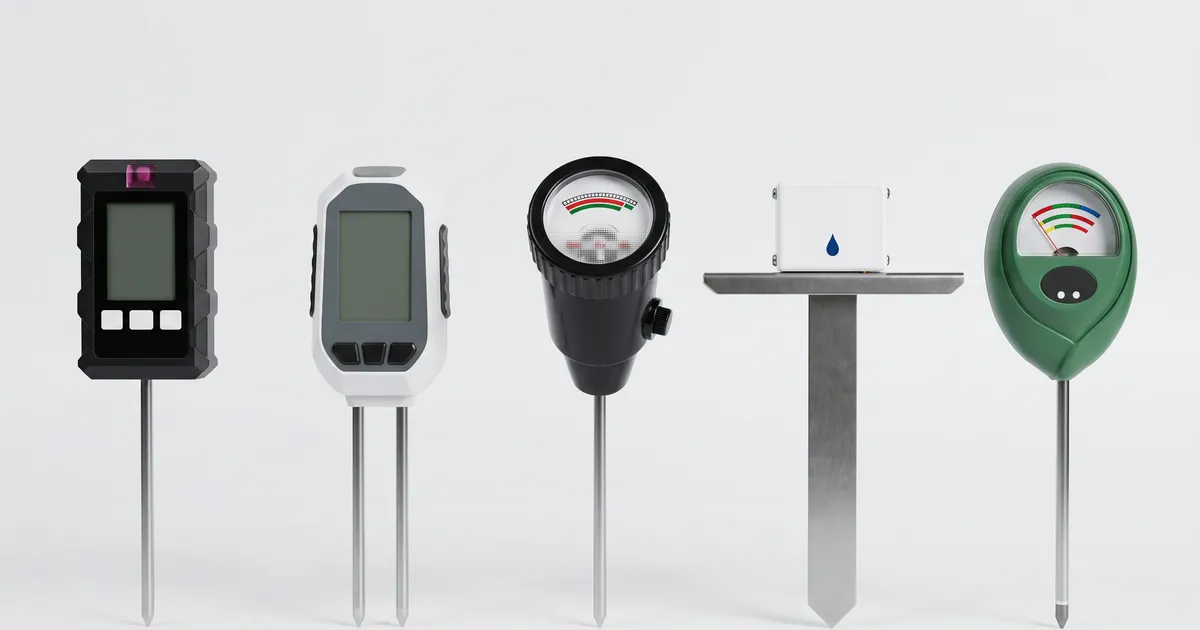
Gardening often comes down to judging soil moisture before plants suffer root damage. You might check a potted ficus or outdoor shrub bed, only to find the surface dry while deep soil stays soaked. A dedicated soil moisture meter helps you see what is happening underground.
Choosing a reliable probe can be tricky when store shelves are packed with simple dials that look identical. One buyer's meter showed the same reading in a very wet pot as in garden soil, and another got readings all over the place, between 2 and 8, around the same plants.
We read what buyers report about daily probe durability, display visibility, and reading stability across different soils. We set these findings beside the listings' own specifications.
How this list was built
The editor placed the first pick; what the page says about it comes from its own product page. The other soil moisture meters were chosen by how much buyers bought, reviewed and rated them, one per brand, in the same price band, then the editor read what their buyers report, quoted exactly as written; nothing is claimed beyond those reviews and the listings' own specifications.
By the numbers
- Buyers
- 17
- Listings
- 4
- Reviews quoted
- 17
- Picks
- 5
How the shortlist was drawn
- The editor’s pick firstThe first pick was placed first by the editor; the other picks were chosen by the stated rule from products in the same price band.
- The editor's ruleThe other picks were chosen by how much buyers bought, reviewed and rated them, one per brand.
- Sold new on Amazon USEvery pick after the first was listed new and in stock on Amazon US, with a price, when this guide was built.
What each pick was judged on
- Screen VisibilityOwners report how easily dials and digital screens can be read from standing height.
- Stem StrengthBuyers describe how well metal shafts push through hard or compacted planting mediums.
- Reading StabilityReports show whether moisture needles and digital sensors give steady numbers in damp dirt.
- Prices are not listed. They move constantly and a stale number helps nobody — the retailer shows what it costs right now.
Here are the 5, in the editor's order.
The editor placed the first pick. The other picks were chosen by the stated rule from products in the same price band; TrueValuePick earns nothing from any link. How a guide is put together.
Our top 5 picks
No. 1
AcioSolex SoilMaster

The AcioSolex SoilMaster is a handheld soil tester that its store page describes as six tools in one: it reads pH, fertility, moisture, temperature, light and humidity on a backlit digital screen. The page says a reading takes 3 seconds and that the probes go 4 to 6 inches into the soil.
It runs on a removable battery, which the page says typically lasts 6 to 12 months, and works indoors and outdoors. The box holds the meter and a user manual, and the store lists 24/7 customer support. There are no buyer reports yet, so everything here comes from its own product page.
Pros
- Reads pH, fertility, moisture, temperature, light and humidity
- Backlit digital screen
- Removable battery that the page says lasts 6 to 12 months
- Works for indoor and outdoor plants, the store page says
- The store offers 24/7 customer support
Cons
- Needs a battery, unlike the two battery-free analog picks
- Its page gives no probe length; it says to insert the probes 4 to 6 inches deep
What to expect
Day-to-day operation centers on pushing the probe four to six inches into potting mix or garden soil to pull quick readings across six soil and environmental metrics. The digital display lights up clearly in shaded garden corners or dim indoor areas, providing data on moisture, fertility, and pH in just seconds. Owners will need to periodically replace the removable battery, and gentle insertion is typical for plastic housing to prevent stress on the stem over repeated seasonal use.
Our conclusion
This tester suits gardeners who want several soil readings, moisture among them, on one backlit digital screen, for pots indoors and beds outdoors. Its store page lists six measurements, a 3-second reading and a removable battery. The trade-offs are what the page leaves open: it gives no probe length, only a 4 to 6 inch insertion depth, and the meter needs a battery. There are no buyer reports yet, so this summary rests on the page's own description.
No. 2
Buladeke Soil Moisture Meter

The Buladeke Soil Moisture Meter suits gardeners who want multi-parameter feedback from a single digital probe. One owner notes it eliminates guessing when checking different areas of the garden for water or fertilizer needs.
A buyer confirmed the tool is very durable and held up great after a big rain storm. The digital screen includes a light sensor measured in LUX that automatically turns the LCD backlight on and off depending on perceived light levels.
However, an owner noted the display sits at a slight fixed angle that is not tilted enough to read comfortably while standing right over it. That limitation forces you to step back or kneel down to view the backlit digital screen straight on.
Pros
- Eliminates guessing when checking different garden areas for moisture and fertilizer needs
- Built with water resistant construction that survived outdoor use after heavy rain
- Automatic light sensor switches the LCD backlight on and off based on ambient light
Cons
- Fixed display angle forces users to kneel or step back to read numbers clearly
What owners say
Amanda · Amazon buyer
I especially like being able to check different areas of my garden instead of guessing whether something needs water or fertilizer. It’s quick, simple to use, and has already helped me get a better idea of what my plants actually need.
Randy Johnson · Amazon buyer
In terms of physical adjustability, while the screen sits at a slight fixed angle, the display isn't quite tilted enough for me to read comfortably while standing right over it, so I have to step back or kneel down to view the screen straight on.
Derek · Amazon buyer
The screen is pretty neat! Because it has a light sensor (measured in LUX) it actually turns on/off the LCD backlight automatically depending on the perceived light level.
Elizabeth Stamey · Amazon buyer
It’s very durable! Definitely is water resistant. I used it first after a big rain storm and it held up great.
Our conclusion
This multi-function tester is ideal for gardeners who want digital data across soil moisture, fertility, and ambient sunlight. An owner found that the housing held up great in wet conditions after a big rain storm, making it dependable around your yard. It simplifies plant care by helping you check different areas instead of guessing water and fertilizer needs. The main trade-off is fixed screen visibility, which requires stepping back or kneeling to view readings straight on.
No. 3
Gain Express Soil Moisture Meter ZD-06

The Gain Express Soil Moisture Meter ZD-06 suits outdoor growers who need a self-powered tool for testing garden soil. Its long probe penetrates deep into the ground without requiring any batteries for daily operation.
One owner puts the probe into the ground as far as it will go, sets a timer for ten minutes, and presses the button for an easy moisture reading. Another buyer observed that the device appears to give accurate information based on known conditions.
The main drawback is reading accuracy, as another owner reported that the meter produced consistent readings that were unfortunately not accurate. You should follow the instructions to ensure your meter lasts a long time during routine garden use.
Pros
- Simple push-button operation toggles quickly between moisture levels and pH numbers
- Long probe lasts a long time and needs no batteries
Cons
- One owner reported consistent numbers that failed to reflect accurate soil conditions
What owners say
Amazon56 · Amazon buyer
I put it in the ground as far as it will go, set a timer on my phone for about ten minutes and walk away. When I get back, the ph reading is on the screen, press the button and it tells you about moisture. Easy!
AZ Central Highlands · Amazon buyer
The readings on the meter are quite consistent, which would normally give me confidence in their accuracy. Unfortunately, they are consistent but not accurate.
Thomas S. · Amazon buyer
The long probe is choice. Read the instructions and it will last a long time(bonus: no batteries needed).
Bruce DeShazo · Amazon buyer
Product appears to give accurate information based on known conditions.
Our conclusion
This long-stem meter suits outdoor growers who want battery-free soil testing. The long probe allows you to put the device deep into the ground, and one owner reported that it provides accurate information based on known conditions. Another buyer appreciated that it requires no batteries and measures moisture with a simple button press. However, one user found that readings were consistent but not accurate, making measurement reliability an important practical trade-off.
No. 4
REOTEMP Soil Moisture Meter 4316238139

The REOTEMP 4316238139 suits fruit tree growers and container gardeners who need a sturdy probe for dense soil. Its thick metal stem easily penetrates fairly compacted plant medium without fear of breaking.
One owner appreciated being able to check several spots around fruit trees confidently. Another user reported that the meter worked immediately out of the box, detecting saturated soil near container bottoms alongside drier conditions near the root ball.
However, a buyer noted that probing soil four to eight inches deep at multiple angles produced readings ranging between two and eight. This shows that reading stability can fluctuate during shallow multi-angle testing.
Pros
- Durable probe design allows checking multiple spots around fruit trees without breaking
- Reveals moisture differences between outer container edges and the central root ball
Cons
- One owner reported readings fluctuating widely between two and eight across shallow tests
What owners say
James Wray · Amazon buyer
The moisture meter worked right out of the box and I quickly discovered the soil was extremely saturated near the container sides and bottom, (9 on the scale) but much drier near the root ball (2 - 3 on the scale).
T. Day · Amazon buyer
After probing the soil multiple times about four to eight inches deep around all three plants (and at multiple angles), the readings were all over the place between 2 and 8.
Blaine M-G · Amazon buyer
I like that the probe is strong enough to be able check several spots around my fruit trees. No fear of breaking it.
Joe C. · Amazon buyer
The probe is probably 1/4" + thick, and has no problem getting down into fairly compacted plant medium.
Our conclusion
This heavy-duty probe suits gardeners managing fruit trees and deep container plants. Its thick stem penetrates fairly compacted plant medium without any fear of breaking the probe during multiple spot checks. One owner quickly discovered soil was saturated near container edges while much drier near the root ball. However, another user reported that readings fluctuated between two and eight across multiple shallow insertions, making reading consistency an important consideration.
No. 5
AiGerdinn Soil Moisture Meter 003

The AiGerdinn Soil Moisture Meter 003 suits gardeners who want an adjustable reading head and battery-free operation. Buyers highlight the tilting top section, which pivots to make the analog scales readable and convenient to check.
One owner appreciated that the device was easy to use and helpful for identifying soil conditions. Another buyer confirmed it accurately measures pH, moisture, fertilization, and light without requiring any batteries.
However, build quality remains a concern because one owner noted the construction feels cheap. Another buyer tested a potted plant with very wet soil, but the probe showed the same reading as garden soil across all settings except for the light tester.
Pros
- Operates without batteries to identify general soil moisture, pH, and lighting levels
- Pivotable head makes the scales easier to read
Cons
- Overall casing and stem construction feels cheap
- One owner reported the probe failed to register moisture differences in wet soil
What owners say
Bob O. · Amazon buyer
I placed the probe in a potted plant with the soil very wet. The tester showed the same as my garden soil did on all settings. The only thing that seemed to work was the light tester.
Amazon Customer · Amazon buyer
Scales are readable, and the head which contains the scales is pivotable to make the scales easier to read.It's worthwhile that it does not need batteries to make it's readings.
Wendy T · Amazon buyer
I found the soil tester easy to use and I really like how it tilts to make reading it convenient. It accurately measures ph, moisture, fertilization and light.
Fred F. · Amazon buyer
The soil tester is easy to use and was extremely helpful identifying soil conditions.
Our conclusion
This multi-function tester suits indoor and outdoor plant growers who value convenient dial adjustments without buying batteries. The pivoting head tilts to make analog scales easier to read, and an owner found it helpful for identifying soil conditions. It measures pH, moisture, fertilization, and light without requiring power. However, one buyer noted that construction feels cheap, while another found the meter showed the same reading in wet potted soil as in regular garden soil.
Buying guide
Probe Length and Stem Strength
Matching stem length to your container or garden bed determines whether you reach active root zones. Short shafts work well for shallow indoor houseplants, but deep outdoor root balls need longer reach to detect hidden water pockets. A thick metal shaft avoids bending when you push into dense dirt.
One buyer chose a thick metal probe because the flimsy probes on other meters bent and broke in the soil.
Display Angle and Screen Clarity
Clear displays save you from crouching down to check soil status across multiple planters. Analog dials with a tilting head mechanism face upward while the probe remains buried in the soil bed. Digital screens often include automatic backlights that adjust to ambient daylight.
Fixed screens that point straight out can make reading numbers awkward when you stand over deep planters. Finding an angle you can read while standing helps you check many plants quickly during routine watering rounds.
Power Sources and Sensor Types
Battery-free analog meters need no power at all, which buyers of two of these picks count as a plus. One owner of such a meter leaves the probe in the ground for about ten minutes before reading it.
Digital multi-function testers require standard alkaline cells to operate illuminated LCDs and advanced sensors. Choosing a model with clear low-battery warnings prevents sudden power loss in the middle of checking outdoor garden beds.
Mistakes buyers keep making
Drawn from what buyers complain about in their reviews.
Forcing probes into hard ground
one listing says not to force the probe into dry or hard soil but to moisten the spot slightly first, and one buyer warns the probe can be damaged if forced.
Testing plain liquids directly
Submerging soil-only probes into cups of water or liquid fertilizers produces invalid measurements because these devices are designed specifically for soil contact.
Taking readings too quickly
one owner leaves the probe in for about ten minutes before reading it, and one listing says to wait 10 seconds after inserting the probe.
Neglecting periodic calibration
Failing to calibrate your soil meter periodically or using it outside its specified operating temperature range can reduce the overall accuracy of your measurements.
Frequently asked questions
Do all soil moisture meters require batteries?
No. The Gain Express and AiGerdinn meters need no batteries, while the Reotemp runs on one AAA battery, the Buladeke on four AAA batteries, and the AcioSolex on a removable battery.
Why does my meter show dry soil in wet potting mix?
It can be the meter. One buyer's meter showed the same reading in a very wet pot as in garden soil, while another meter showed a pot saturated near its sides and much drier near the root ball. Readings also vary with where you probe: one owner got values between 2 and 8 around the same plants.
Can buyers use these soil meters to test liquids directly?
No. The Buladeke listing says its probe must not be used directly to measure liquids, and it checks water quality through separate EC and TDS functions.
How deep should I insert the moisture probe?
Insert the probe deep enough into the soil to reach the active root zone of your plants. Depending on the model and pot size, you can push the stem several inches or as far as it goes into the ground. Taking readings at multiple depths helps you evaluate moisture near both the surface and the root ball.
How were these picks chosen?
The editor placed the first pick; its description comes from its own product page. The other picks were chosen by how much buyers bought, reviewed and rated them, one per brand; they were listed new and in stock on Amazon US, in the same price band, when the guide was built, and every quote on this page is an excerpt of a buyer's own review of that product, copied word for word. The site tests nothing itself.

Walter Dunmore
Editor, Garden & Lawn guides
Walter Dunmore covers garden and lawn gear for TrueValuePick, building each guide from what owners report in public about the mowers, trimmers and garden tools they work with.
Compiled this guide from buyer reviews, each one checked against an archived copy of the listing it came from.